
The drum seeder vs needle seeder decision is one of the most common questions from commercial nursery operators. Both technologies are proven and cut labor costs dramatically, but the right choice depends on your seed type, throughput, and operating cost priorities.
If you produce pelletized or uniform-shape seeds at high volume (700-1,200 trays/hour), choose a drum seeder like the KMR-200. If you need maximum precision on small or irregular seeds (500-1,200 trays/hour), choose a needle seeder like the KMR-100. For operations under 500 trays/hour, the KMR-80-2 one-button needle seeder is the most cost-effective option.
How They (Drum Seeder vs Needle Seeder) Work
A drum seeder uses a rotating drum with multiple suction ports that pick and drop dozens of seeds in parallel, reaching 700-1,200 trays/hour. The Taizy KMR-200 adds a seed recovery device (returns unused seeds to the hopper) and a photoelectric sensor (holds seeding when no tray is present).
A needle seeder uses individual suction needles arranged in a tray-cell grid. Each needle picks one seed at a time, delivering higher precision (>98%) on small or irregular seeds. The KMR-100 uses a Siemens PLC with touch screen control and real-time photoelectric fault detection.
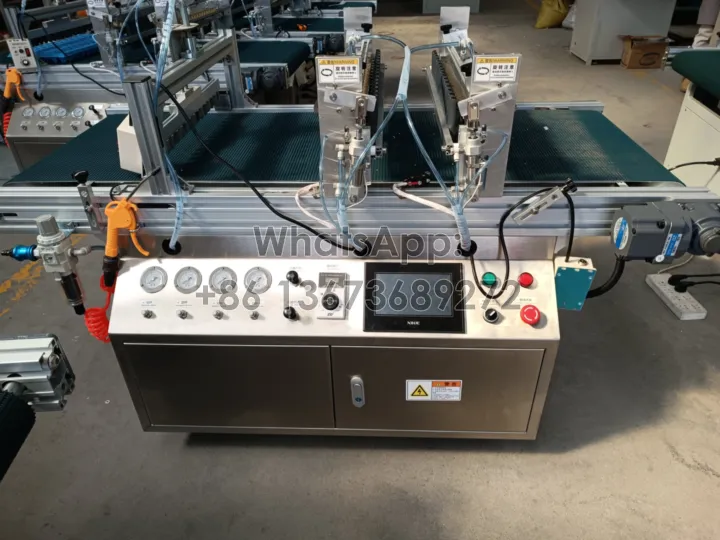
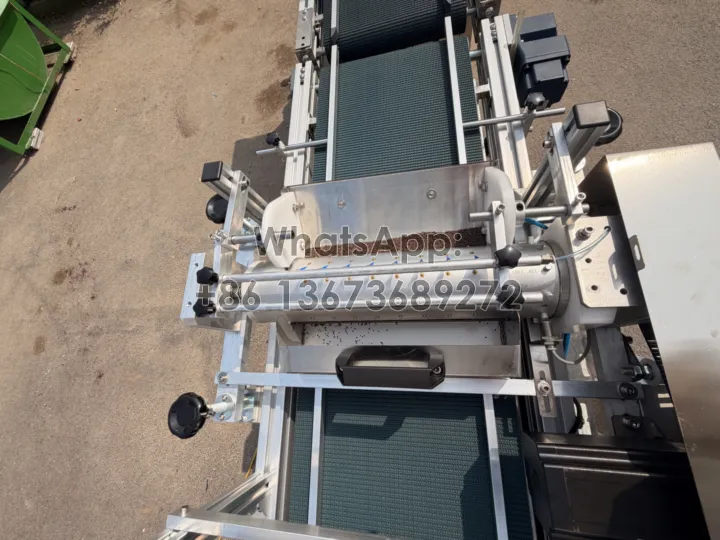
Side-by-Side Comparison
| 规格 | Drum Seeder (KMR-200) | Needle Seeder (KMR-100) |
|---|---|---|
| Seeding Technology | Rotating drum with multiple suction ports | Individual suction needles, indexed per cell |
| 容量 | 700-1,200 trays/hour | 500-1,200 trays/hour |
| Seeding Precision | >95% (pelletized seeds) | >98% (all seed types) |
| Seed Size Range | 0.3-5mm | 0.3-15mm |
| Best Seed Shape | Pelletized, uniform raw seeds | Small, irregular, all shapes |
| Seed Recovery | Yes (dedicated device) | No |
| Control System | Variable frequency + photoelectric | Siemens PLC + touch screen |
| 力量 | 220V, 750W | 220V, 650W |
| Tray Compatibility | Black tray, floating tray (custom) | 32, 50, 72, 105, 128, 200-cell |
| Modular Design | Yes (3 sections) | Optional accessories |
| Starting Price (FOB Qingdao) | USD 3,750 (middle section) | USD 13,280 (full line) |
Capacity and Precision
Both technologies overlap at 1,200 trays/hour, but they get there differently. The drum seeder hits high throughput through parallel action (many seeds per rotation). The needle seeder adds more needles and faster indexing. At the 700+ trays/hour threshold, drum seeders are typically more cost-effective.
On precision, the KMR-100 needle seeder exceeds 98% across the full speed range. The KMR-200 drum seeder exceeds 95% on pelletized seeds but drops on raw (unpelletized) seeds. In practice, 95% vs 98% means 5 vs 2 missed cells per 100-cell tray—a critical difference for automated transplanting or precision seedling sales.
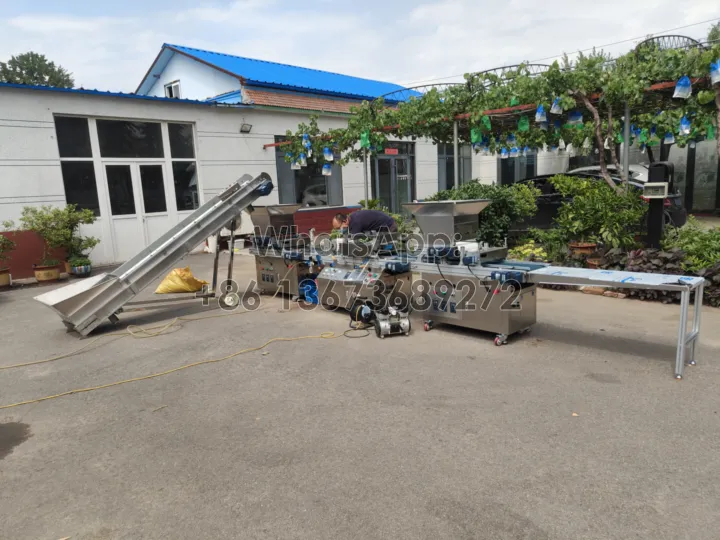
Seed Compatibility
Our drum seeder works best with pelletized and uniform raw seeds in the 0.3-5mm range. Seeds too small (<0.3mm), too large (>5mm), or irregularly shaped do not seal properly against the drum suction ports.
Our needle seeder handles a much wider range: 0.3-15mm, any shape. Each needle uses a dedicated suction tip matched to seed size, making needle seeders the right choice for nurseries producing multiple varieties or switching between raw and pelleted seeds.
| Seed Type | Drum Seeder (KMR-200) | Needle Seeder (KMR-100) |
|---|---|---|
| Pelletized tomato, pepper, eggplant | ✅ Excellent | ✅ Excellent |
| Raw tomato, pepper, eggplant | ⚠️ Lower precision | ✅ Excellent |
| Lettuce, celery, herbs | ✅ Good (pelletized) | ✅ Excellent |
| Cabbage, broccoli, cauliflower | ✅ Good (pelletized) | ✅ Excellent |
| Cucumber, melon, watermelon | ⚠️ Marginal | ✅ Excellent |
| Tobacco (floating tray) | ✅ Excellent | ⚠️ Limited |
| Small flower seeds | ⚠️ Limited | ✅ Excellent |
| Raw irregular seeds | ❌ Not recommended | ✅ Excellent |
Operating Cost
The KMR-200’s seed recovery device captures 10-15% of input seed and returns it to the hopper. For expensive pelletized or hybrid seeds at $200-500 per kilogram, this savings pays for the recovery device within the first year. Needle seeders have no recovery system—higher precision offsets this somewhat, but premium seed economics still favor drum seeders.
Both machines run on standard 220V power (750W vs 650W) and require compressed air. Power cost differences are negligible.
Best Applications
Choose a drum seeder (KMR-200) if you work with pelletized seeds, produce tobacco/rice/floating-tray crops, prioritize seed economy, or already have soil filling/covering equipment and only need the middle section.
Choose a needle seeder (KMR-100) if you produce raw or irregular seeds, switch between multiple varieties, or need maximum precision with Siemens PLC control.
Real-World Case Study: Turkish Farm
In late 2025, a Turkish nursery evaluated both technologies at our facility. Their production: 12,000+ trays/week of pelletized tomato, pepper, eggplant, plus tobacco seedlings. They selected the KMR-200 middle section because their pelletized seed stock hit 95%+ drum precision, and the drum middle section could retrofit onto their existing soil filling/covering stations—saving the cost of a full line replacement.
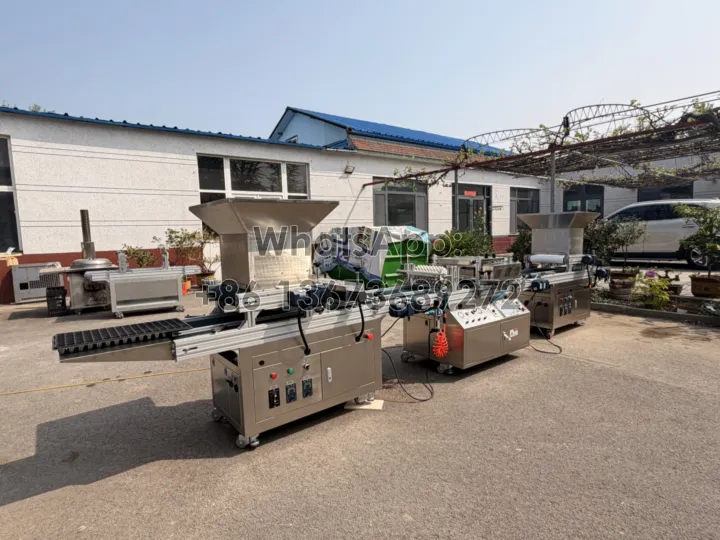
Get a Quote or Schedule Factory Testing
To request specifications, pricing, or factory testing for the KMR-200 or KMR-100, contact our sales team. Send us your seed sample and tray specifications—we will run your seeds through both technologies at our facility to confirm which is the right fit for your operation.
For related reading, see our KMR-200 drum seeder product page, KMR-100 needle seeder product page, or browse the complete nursery seeding machine lineup.